What is Aporophobia?
Aporophobia refers to fear, rejection, or hostility towards people perceived as poor or economically marginalised. The term was introduced by Professor Adela Cortina, a Spanish philosopher, to describe forms of exclusion and stigma directed at people because of their economic situation.
It is not simply about poverty itself, but about how individuals and communities experiencing poverty are treated, excluded, or marginalised in everyday interactions, institutions, and public spaces.
Aporophobia can shape attitudes and behaviours in subtle but powerful ways — influencing who is trusted, who is listened to, and whose experiences are taken seriously.
Why does Aporophobia matter?
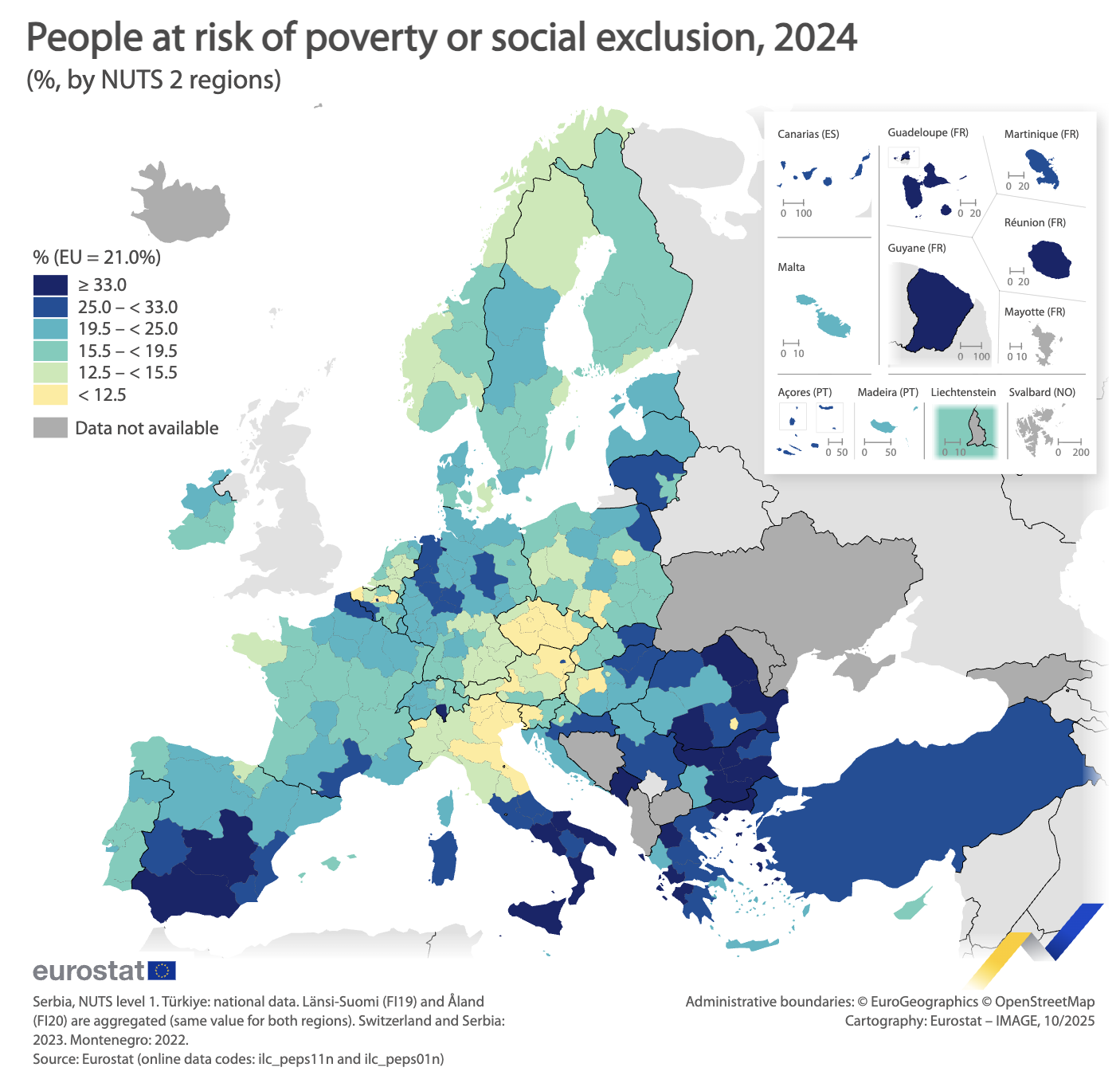
Across Europe, significant numbers of people live at risk of poverty or social exclusion, highlighting the structural conditions in which aporophobic attitudes can emerge and persist.
In many neighbourhoods, people affected by poverty face higher exposure to crime, exploitation, and insecurity, while simultaneously experiencing lower levels of trust in public institutions, including law enforcement.
Aporophobia can:
- discourage people from reporting crime or seeking support,
- deepen social exclusion and mistrust,
- increase vulnerability to criminal exploitation,
- and undermine long-term community safety and cohesion.
When stigma and mistrust persist, they can weaken cooperation between communities and police, making prevention and early intervention more difficult.
Aporophobia and community policing
Addressing aporophobia is not about assigning blame — it is about understanding structural and social dynamics that affect trust, communication, and safety.
Effective community policing depends on:
- respectful, sustained dialogue,
- recognition of lived experience,
- and shared responsibility for safety.
Where aporophobia is present, these foundations can be fragile. BTL-COP recognises that building trust requires acknowledging and addressing the ways poverty and stigma shape interactions between communities and police.
How BTL-COP addresses Aporophobia
BTL-COP tackles aporophobia indirectly and constructively, by focusing on trust, leadership, and collaboration rather than labels or stereotypes.
The project does this by:
- supporting Trust in Neighbourhood Groups (TING) as safe spaces for dialogue,
- strengthening police and community leadership skills for inclusive engagement,
- co-designing approaches with people who have lived experience of poverty,
- developing training, tools, and methods that promote fairness, empathy, and shared understanding,
- translating local learning into policy and practice recommendations.
Rather than treating aporophobia as an abstract concept, BTL-COP addresses its real-world consequences — mistrust, exclusion, and vulnerability — through practical, tested solutions.
A shared challenge, a shared responsibility
Aporophobia is a societal challenge that cuts across borders, institutions, and communities. By working across diverse European contexts, BTL-COP aims to generate transferable knowledge and approaches that help build safer, more inclusive neighbourhoods where trust can grow over time.